Home  /  Service & Repairs  /  Opener Installation

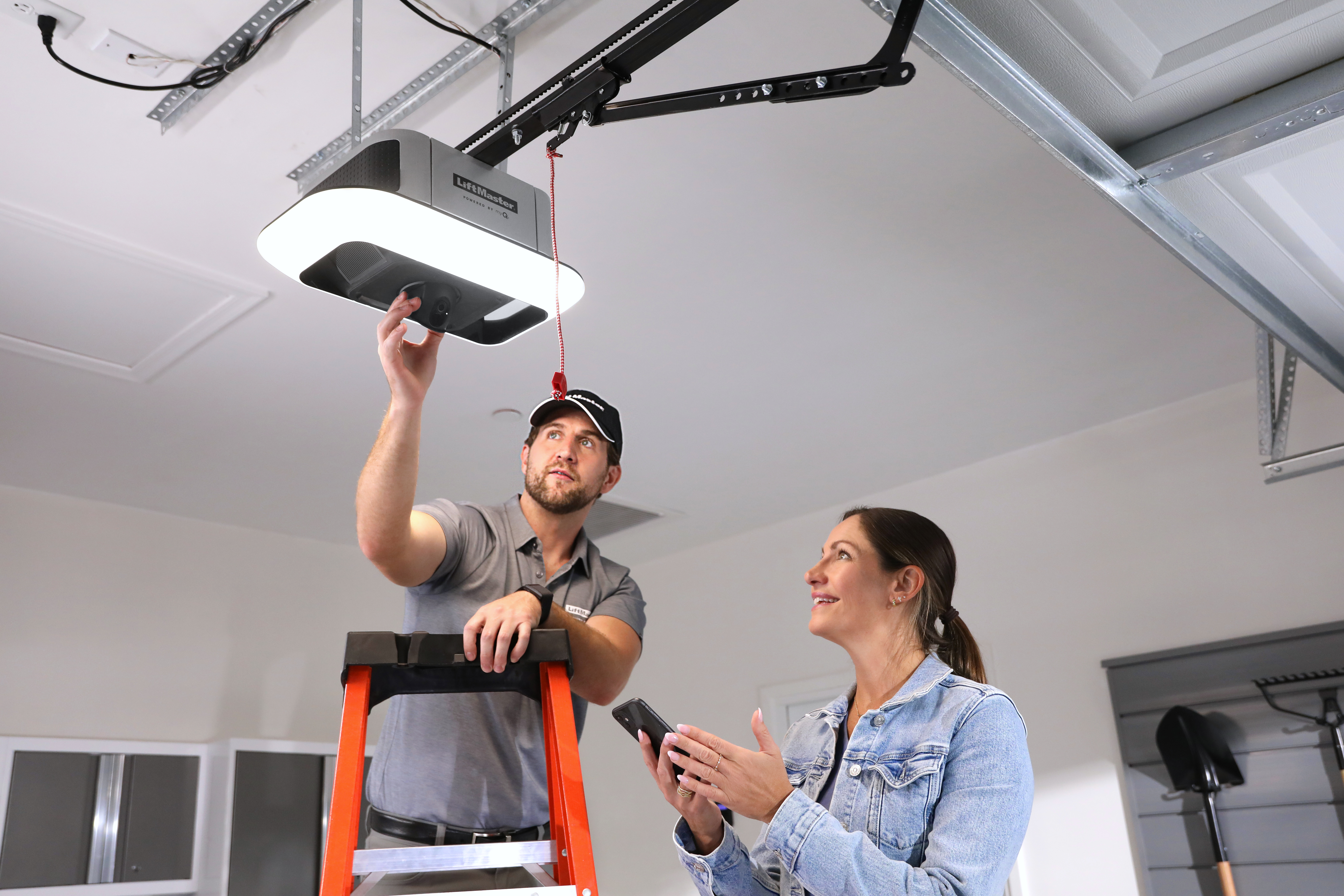
Garage Door Opener Installation

Belt drive, chain drive, wall-mount jackshaft and commercial operators — sized to your door, installed and safety-tested by L&L technicians across NYC, Nassau and Suffolk.

  • 60+ YearsResidential & commercial operators
  • Licensed & InsuredOSHA Certified · NY DCA #2053509 · Nassau CA #184881

Opener Installation

New Garage Door Openers, Installed Right

A garage door opener runs 15 to 20 years on average — less if the door is your main entrance and cycles four or five times a day. When it starts hesitating, reversing for no reason or grinding on the way up, it's usually near the end.

Installing an opener isn't just bolting a motor to the ceiling. The door has to be balanced first, force and travel limits have to be set correctly, and the photo-eye safety sensors have to be aligned and tested. Get any of that wrong and you have a heavy door with an unreliable auto-reverse — which is how people and vehicles get hurt.

L&L installs and services residential and commercial operators throughout the five boroughs, Nassau and Suffolk. Tell us your door size, weight and headroom and we'll spec the right unit.

  • Signs Your Opener Is Failing
  • Grinding or clattering from the motor housing
  • Door reverses partway with nothing in its path
  • Motor runs but the door doesn't move — stripped gear
  • Remotes work intermittently or only up close
  • Door stops several inches short of closed
  • Vibration loud enough to hear through the ceiling
  • No photo-eye sensors at all — pre-1993 unit
  • Unit is 15+ years old and repairs are stacking up

Operator Types

Which Opener Fits Your Garage

The right drive depends on your headroom, your door weight and what's above the garage.

Quietest

Belt Drive

A reinforced rubber belt instead of a metal chain. The clear pick when there's a bedroom above or beside the garage, or in an attached home where noise carries. Higher upfront cost, near-silent operation.

Workhorse

Chain Drive

Proven, durable and the most economical option. Louder than belt, which rarely matters on a detached garage. Handles heavier doors without complaint.

Low headroom

Wall-Mount Jackshaft

Mounts beside the torsion shaft instead of on the ceiling. Frees the entire overhead for storage, a lift or a finished ceiling — the standard fix for tight Brooklyn and Queens garages.

Connected

Wi-Fi Smart Openers

Open, close and check door status from your phone. Get an alert when the door has been left open, and grant one-time access for deliveries without handing out a remote.

Power outage

Battery Backup Units

Keeps the door operating through an outage — worth having when the garage is your only ground-floor entrance. Now standard on many new residential models.

Commercial

Commercial Operators

Trolley, hoist, jackshaft and gear-head units for rolling steel, sectional and high-cycle doors. Spec'd by door weight, cycle count and duty rating — not by horsepower alone.

Free Estimates

Not Sure Which Opener You Need?

Send your door size and a photo of the current unit. We'll tell you whether it's repairable, and what a replacement costs installed.

(718) 721-2518

Residential

Home Garage Openers

For most homes the decision comes down to noise and headroom. If there's living space above the garage, belt drive or wall-mount is worth the difference. If the ceiling is low or already finished, wall-mount is the only clean answer.

Every residential install includes travel and force limit calibration, photo-eye alignment, auto-reverse testing, and programming of remotes, keypad and wall control before we leave.

Commercial

Commercial & Industrial Operators

Warehouses, parking garages, auto shops and loading docks need operators rated for the cycle count they actually see. An undersized unit on a high-traffic door fails in months, usually at the worst time.

We spec and install operators for rolling steel, sectional and high-cycle doors, plus safety edges, loop detectors, timers and card or fob access integration.

High-cycle doors: ask about a preventive maintenance agreement when we quote. Scheduled service on a dock operator costs a fraction of an emergency call that shuts the bay down.

The Process

What Installation Day Looks Like

  1. Assess the Door

    We check balance, spring tension and hardware first. A new opener on an unbalanced door burns out early — the door gets corrected before the motor goes up.

  2. Spec the Unit

    Drive type, horsepower and features matched to door weight, headroom and how often you use it. Written pricing, installed.

  3. Install & Calibrate

    Old unit removed, new operator mounted, rail assembled, travel and force limits set to the door's actual weight.

  4. Safety Test & Handover

    Photo eyes aligned, auto-reverse tested against an obstruction, remotes and keypad programmed, and we show you the manual release before we go.

FAQs

Opener Questions

How long does a garage door opener last?

Typically 15–20 years for a household using the door a few times a day. Heavy use shortens that considerably. The gear assembly and logic board are usually what fail first — on a 15-year-old unit, replacing either often costs more than it's worth.

Repair the opener or replace it?

Repair makes sense for misaligned sensors, a dead remote, a snapped trolley or a worn gear on a newer unit. Replace when the unit is 15+ years old, when the logic board fails, or when it has no photo-eye sensors — pre-1993 openers lack the federally required safety reversal system entirely.

What horsepower opener do I need?

Less about horsepower than door weight and balance. A single steel door is fine on ½ HP; a double, insulated or wood door wants ¾ HP or more. Heavier custom and carriage-house doors often need 1 HP or a jackshaft unit. We calculate it off the actual door rather than guessing from the opening size.

Can you install an opener on my existing door?

Usually yes, as long as the door is structurally sound and properly balanced. We inspect springs, cables and rollers first — installing a motor on a door that isn't balanced puts the load on the opener and shortens its life dramatically.

Do I need a battery backup?

Strongly recommended if the garage is your primary entrance or you park a vehicle you'd need during an outage. Without it, an outage means using the manual release from inside the garage — which does you no good if you're outside. Many current models include it standard.

Which areas do you install in?

All five NYC boroughs plus Nassau and Suffolk County.

Next Step

Get Your Opener Installed This Week

Free estimates on residential and commercial opener installation across NYC and Long Island. Same-day service available for units that have failed completely.