A garage door weighs 130 to 400 pounds and moves under high spring tension. Knowing the warning signs of an unsafe door protects your family, vehicles, and property.
Why garage door safety matters
The average residential garage door weighs between 130 and 400 pounds. Torsion springs hold enough mechanical tension to lift that weight — and to cause serious injury if they fail or are mishandled. The auto-reverse safety system is designed to protect children and pets from being trapped under a closing door. Knowing the warning signs lets you catch problems before they become emergencies.
Sign 1: Broken or stretched springs
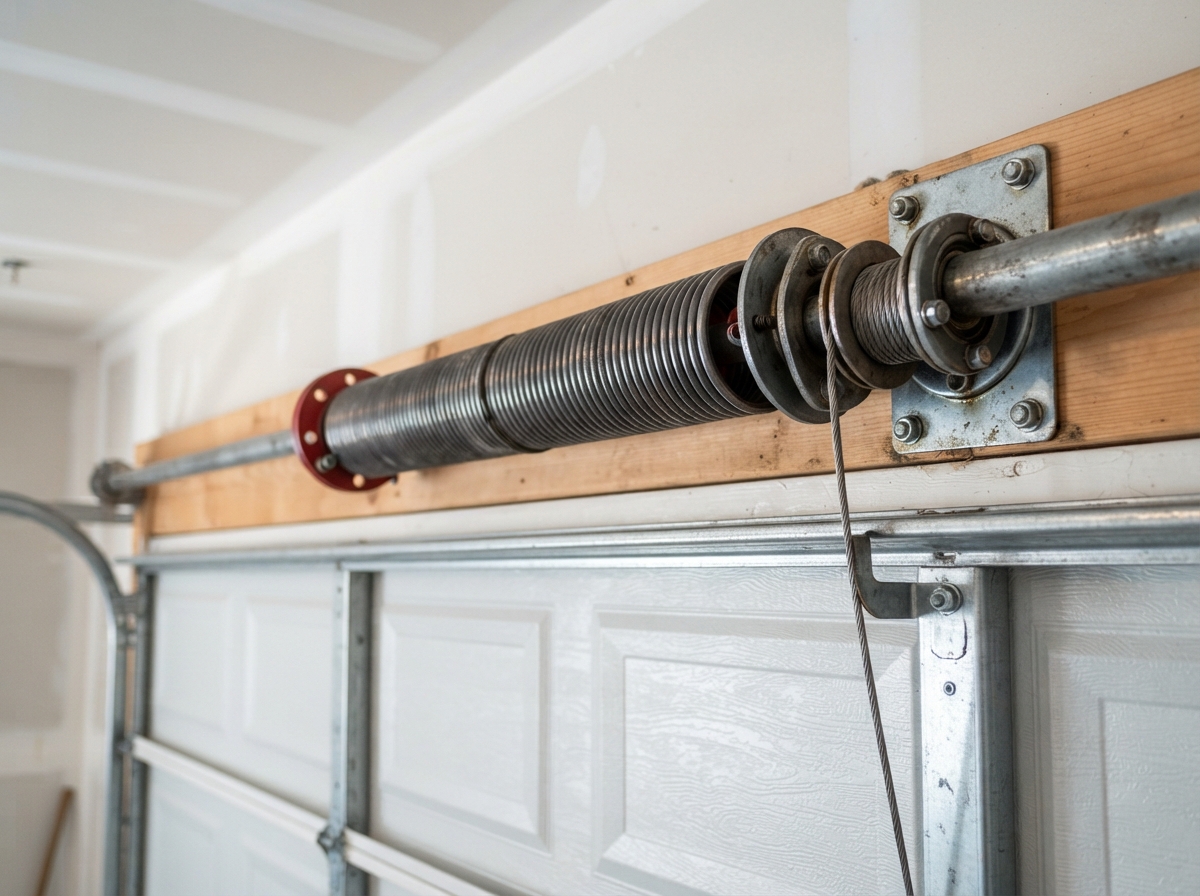
A visible gap in the spring coil means a torsion spring has snapped. A stretched spring with gaps between the coils has lost tension. Either condition means the door is no longer counterbalanced and can crash down if the opener disengages or the cable slips. Stop using the door immediately and keep people and vehicles clear.
Sign 2: Frayed or rusted cables
Lift cables carry the full weight of the door from the torsion shaft to the bottom bracket. Frayed wire strands, visible rust, or a cable that has unwound from the drum are all signs of imminent failure. A snapped cable drops one side of the door abruptly, pulling the door off its tracks. Cables showing wear should be replaced before they snap.
Sign 3: Failed auto-reverse safety test
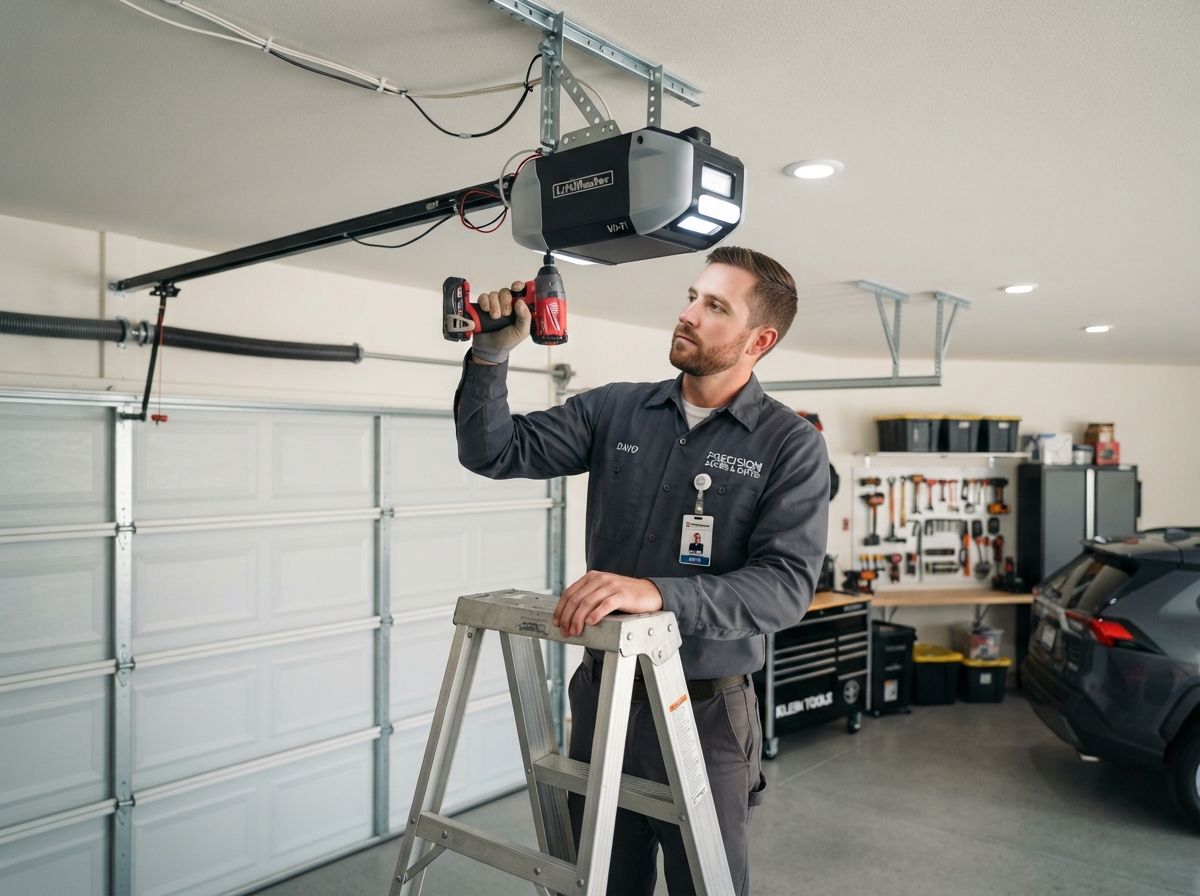
Modern openers have two safety reversal systems: the photo-eye sensor beam and the mechanical force sensor. Test both monthly. Place a 2x4 flat on the floor under the open door and press close — the door should reverse immediately upon contact. Wave a broomstick across the sensor beam path while closing — the door should reverse. If either test fails, the safety system needs repair before the door is used again.
Sign 4: The door drops quickly when released
Pull the emergency release cord with the door halfway up and hold the door. A properly balanced door stays in place or moves slowly. If the door drops rapidly, the springs are no longer counterbalancing the weight and the door is unsafe to operate. This is a spring tension failure that needs immediate professional attention.
Sign 5: Bent, dented, or rotted tracks and panels
Tracks that are bent, spread apart, or rusted can let rollers escape and cause the door to derail. Panels with rot, cracks, or separation at the seams may not hold the door's structural integrity under tension. If a vehicle has bumped the door, have the tracks and panels inspected even if the door still appears to operate — hidden damage can cause a later failure.
What to do if your door is unsafe
Stop using the door. Keep children, pets, and vehicles away from the opening. Do not attempt to lift or lower the door manually if springs or cables are involved — the tension can cause sudden movement. Pull the emergency release only if the door is in the down position and you can confirm it will not crash down. Call for professional service and request an emergency dispatch if the door is stuck open, compromising home security.
Related Services
Serving Your Area
Book these services locally — our technicians dispatch across every NYC borough and Long Island.
Garage Door Spring Replacement
Garage Door Cable & Drum Repair
Garage Door Track Repair & Realignment