
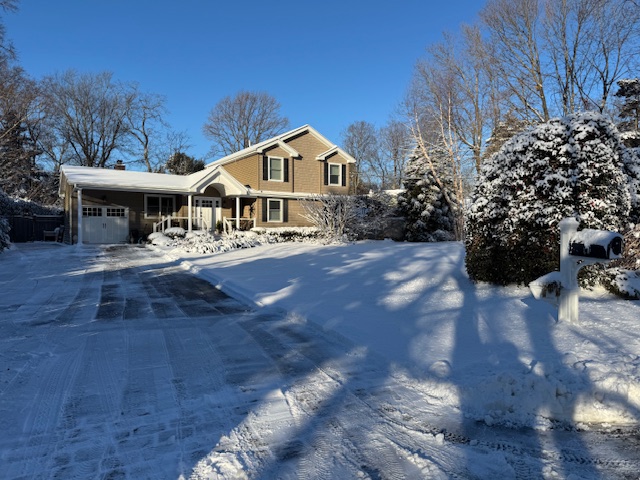
Winter is tough on garage doors. Cold temperatures, snow, ice, and moisture can all affect how your system works.
If your garage door starts acting up, don’t stress. Many of the most common winter garage door issues are easier to fix than you expect. Others are a clear sign it’s time to call a professional.
Here are some of the most common winter garage door issues, plus tips on what you can DIY and when it’s time to call for reinforcements.
Keypads That Stop Working in Cold Weather
One of the most common winter garage door issues is a keypad that works one minute and doesn’t the next.
Cold temperatures can affect keypad performance, especially if the batteries are already weak.
Start by replacing the batteries in the keypad. In many cases, that solves the problem right away.
If the issue keeps coming back, even with new batteries, the cold may simply be pushing an older keypad past its limits. At that point, replacing the keypad is usually the best long-term solution.
Snow or Debris Blocking the Safety Sensors
Garage doors rely on safety sensors near the bottom of the opening to tell the system when something is in the way. In winter, those sensors can get blocked more easily than you might expect.
Snow buildup, slush, wet leaves, or even road salt can interfere with the sensor beam. When that happens, the door may refuse to close or may start closing and then reverse.
Take a quick look near the bottom of both sides of the door. Make sure nothing is blocking the sensors and that the lenses are clean. A soft cloth is usually all you need.
Springs That Break in Cold Weather
Garage door springs do a lot of work year-round, but winter is especially hard on them.
Cold temperatures make the metal less flexible. Over time, that added stress can cause springs to snap, especially if they were already worn.
Heads up! This is not a DIY situation.
Springs are under a lot of tension, and trying to adjust or replace one without the proper tools and training can be dangerous. If you suspect a broken spring, stop using the door and call a professional right away.
Doors That Won’t Close All the Way
In winter, it’s common for doors to stop short of fully closing.
Snow, ice, or debris along the track can interfere with the door’s movement. Even a small buildup can cause the system to think something important (kids, pets, or valuables) is in the way.
Start by checking the area around the door and along the tracks. Clear away any visible obstructions and make sure nothing is frozen in place.
If the door still won’t close properly after that, the issue may be related to alignment or sensor sensitivity, which is best handled by a technician.
Louder Operation and Stiffer Movement
Cold weather can also make garage doors sound louder or feel stiffer when they open and close.
Lubrication thickens in low temperatures, and metal parts contract. That can lead to more noise, slower movement, or a door that doesn’t feel as smooth as usual.
If the noise is new or noticeably worse, it’s worth having the system checked. Catching small issues early can help prevent bigger problems later in the season.
When to Call a Garage Door Pro
Some winter garage door issues are easy to check on your own. Others should never be handled without training.
Call a professional if you notice:
- A broken or stretched spring
- Cables that look loose, frayed, or damaged
- A door that feels extremely heavy or slams shut
- Grinding noises or electrical smells
- A door that is crooked or off track
Trying to force the door or continue using it can make the problem worse and more expensive to fix.
We’re Here to Help
At L & L Overhead Garage Doors, we’ve helped homeowners deal with winter garage door problems for more than 65 years.
Sometimes the fix is as simple as new batteries or clearing a sensor. Other times, it takes a trained eye to spot a problem before it turns into a breakdown.
If your garage door is acting up this winter and you’re not sure what to do next, give us a call.
We’re always happy to help you figure out the next step.